
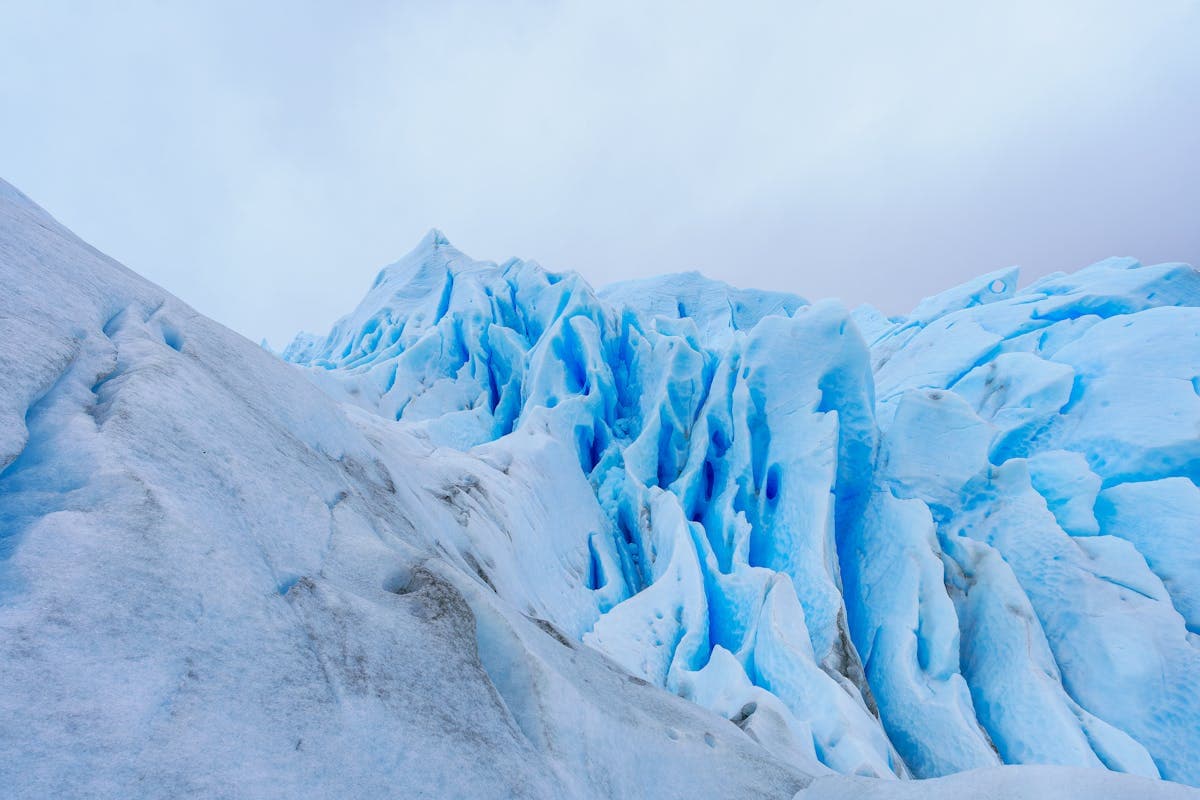
The story of Earth's temperature is not a straight line. It is a long, winding narrative shaped by forces both cosmic and terrestrial, with chapters of warmth that allowed civilisations to flourish and chapters of cold that drove them to the brink. Over the past three millennia, temperatures have risen and fallen in patterns that researchers are still working to fully understand. What follows is a factual overview of what the data shows, what factors scientists and experts believe play a role, and what remains a subject of active investigation.
How Do We Know What the Temperature Was?
Nobody had a thermometer in 1000 BC. The global instrumental temperature record — actual readings from physical devices — only begins in the mid-19th century. Everything before that is reconstructed through what scientists call "proxy records": natural archives that preserve clues about past conditions.
Ice cores drilled from glaciers in Greenland and Antarctica trap tiny bubbles of ancient atmosphere, offering a chemical fingerprint of both temperature and atmospheric composition stretching back hundreds of thousands of years. Tree rings record annual growth patterns that correspond to seasonal warmth and moisture. Ocean and lake sediments contain the shells of microscopic organisms whose chemical makeup shifts in predictable ways with water temperature. Coral skeletons, cave formations called stalagmites, and even historical documents about harvests, wine production, and the freezing of rivers all contribute pieces to the puzzle.
These different methods are cross-checked against one another. Where multiple independent proxy types from different locations tell the same story, confidence in the reconstruction grows. The picture is never perfect — proxy records have limitations in resolution, geographic coverage, and the assumptions required to convert raw measurements into temperature estimates — but together they provide a remarkably detailed view of how climate has shifted over millennia.
The Warm and Cold Chapters
Looking at the past 3,000 years through the lens of proxy data, several distinct climate periods emerge, each with its own character and consequences.
The Roman Warm Period (roughly 250 BC – AD 400)
During the height of the Roman Empire, parts of Europe and the North Atlantic experienced notably mild conditions. Historical sources suggest that date palms could grow in parts of Greece, and tree ring analyses from the Italian Peninsula indicate favourable conditions around the time Hannibal famously crossed the Alps. Wine grapes thrived in regions of Britain where they are marginal today, and Alpine glaciers appear to have retreated significantly.
However, research published in recent decades suggests that this warmth was primarily a regional phenomenon concentrated in and around the North Atlantic, rather than a globally synchronous event. Other parts of the world may have experienced different conditions at the same time.
The Dark Ages Cold Period (roughly AD 400 – 900)
Following the Roman warmth, parts of the Northern Hemisphere experienced a cooling trend. Sea surface temperatures near Iceland declined, glaciers advanced, and agricultural productivity in Northern Europe appears to have suffered. This period roughly coincides with significant societal upheaval across Europe, though drawing direct causal lines between climate and historical events is always more complicated than it first appears.
The Medieval Warm Period (roughly AD 950 – 1250)
This is perhaps the most discussed pre-industrial climate interval. During these centuries, conditions in parts of the North Atlantic and Europe were warm enough to support Norse settlement of Iceland and Greenland, with roughly 3,000 farmers establishing themselves in Greenland at the peak. Wine grapes grew as far north as England, and wheat and oats were cultivated near Trondheim in Norway — suggesting temperatures approximately 1°C warmer than modern conditions in those regions.
The extent to which this warmth was global remains debated. Some studies find evidence of simultaneous warmth in parts of Asia and the tropical Pacific, while others conclude that the timing of peak warmth varied significantly from region to region, making it more of a "Medieval Climate Anomaly" than a uniform global event.
The Little Ice Age (roughly AD 1300 – 1850)
The centuries following the Medieval Warm Period brought a prolonged cooling, particularly pronounced in the North Atlantic and Europe. The Norse settlements in Greenland were eventually abandoned as sea ice made shipping routes impassable. Alpine glaciers advanced dramatically, overrunning villages in their path. The Thames in London froze over on multiple occasions, and crop failures from shortened growing seasons contributed to widespread hardship.
At its coldest, temperatures in parts of the Northern Hemisphere may have been 0.5 to 1°C below the 20th century average. Like the warm periods before it, the Little Ice Age was not uniformly global — evidence from the Southern Hemisphere is more ambiguous, and some regions experienced the cooling at different times or not at all.
The Modern Warming (roughly 1850 – present)
The instrumental temperature record, beginning in the mid-19th century, documents a global average surface temperature increase of approximately 1.1 to 1.2°C compared to pre-industrial levels. The rate of this warming — roughly 0.1°C per decade over the past 50 years — is considerably faster than anything identified in the proxy record over at least the past 2,000 years, and possibly much longer.
What Drives Temperature Changes?
Scientists and experts point to a range of factors that influence global and regional temperatures across different timescales. No single mechanism tells the whole story, and the relative importance of each factor has varied throughout history.
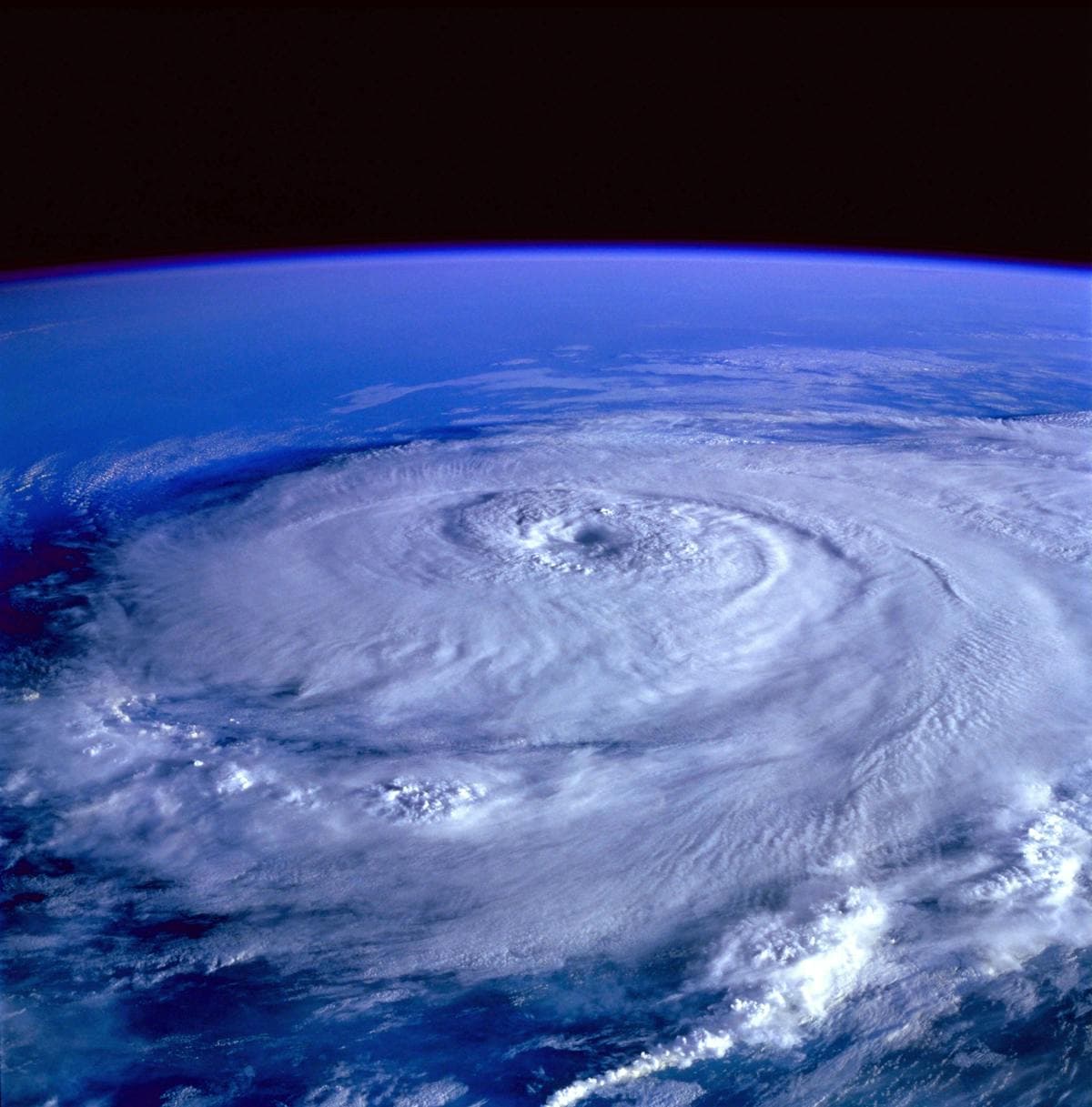
Orbital Variations (Milankovitch Cycles)
On timescales of tens of thousands of years, systematic changes in Earth's orbit — its eccentricity, axial tilt, and the precession of its axis — alter how much solar energy reaches different parts of the planet and at what time of year. These cycles are the primary pacemaker of the ice ages over the past several million years and drove the gradual warmth of the early Holocene (roughly 10,000–6,000 years ago), when temperatures in many regions were 1–2°C warmer than today.
Solar Activity
The Sun's energy output is not perfectly constant. Variations in sunspot activity correlate with small changes in total solar irradiance on the order of 0.1%. Some researchers have linked periods of reduced solar activity — such as the Maunder Minimum (roughly 1645–1715), when sunspots virtually disappeared — with the coldest phases of the Little Ice Age. Increased solar activity may have contributed to the warmth of the Medieval period. However, the magnitude of solar influence on global temperature is estimated to be relatively small compared to other forcings, and solar output has been essentially flat or slightly declining since the mid-20th century.
Volcanic Activity
Large volcanic eruptions inject sulfur dioxide into the stratosphere, where it forms reflective aerosol particles that can cool the planet for one to three years. Clusters of major eruptions may have contributed to the onset or intensification of the Little Ice Age. Conversely, periods with relatively few eruptions may have allowed temperatures to rise. The eruption of Mount Tambora in 1815 caused the "Year Without a Summer" in 1816 — a vivid modern example of volcanic climate influence.
Ocean Circulation Patterns
The Atlantic Meridional Overturning Circulation — the vast system of ocean currents that transports warm water northward — plays a critical role in distributing heat around the planet, particularly in the North Atlantic. Changes in the strength or pattern of this circulation may explain why some climate shifts, like the Medieval Warm Period, were especially pronounced in certain regions while being muted or absent in others. El Niño and La Niña cycles in the Pacific similarly redistribute heat and moisture on shorter timescales.
Greenhouse Gases
Ice cores show that atmospheric concentrations of carbon dioxide and methane have fluctuated naturally over geological time, correlating broadly with temperature changes. For most of the past 800,000 years, CO₂ levels oscillated between roughly 180 and 280 parts per million. Since the Industrial Revolution, concentrations have risen to over 420 ppm — a level not seen in at least 800,000 years. The physics of how greenhouse gases trap infrared radiation has been understood since the 19th century and is not itself controversial in the scientific community. The questions that generate more debate concern the precise sensitivity of the climate system — how much warming results from a given increase in CO₂ — and the relative contribution of greenhouse gas increases compared to other factors at different points in history.
Land Use and Albedo Changes
Deforestation, agriculture, and urbanisation change the reflectivity of Earth's surface. Forests are dark and absorb heat; cleared land and snow-covered ground reflect more sunlight. Over millennia, expanding and contracting human land use has subtly altered regional energy balances. More recently, the loss of Arctic sea ice has reduced reflectivity in polar regions, potentially amplifying warming through a feedback loop.
Cosmic Rays and Cloud Formation
A more speculative hypothesis, proposed by physicist Henrik Svensmark among others, suggests that cosmic rays may influence cloud formation, with higher cosmic ray flux leading to more cloud cover and thus cooling. The mechanism involves cosmic rays ionising atmospheric molecules, potentially seeding cloud condensation nuclei. This idea remains a subject of active research and debate — experiments at CERN (the CLOUD experiment) have confirmed that ionisation can influence aerosol formation, but the magnitude of the effect on real-world cloud cover and global temperature is still uncertain.
Aerosols and Particulate Matter
Both natural sources (sea spray, dust, wildfires) and human activities (burning fossil fuels, especially coal) release tiny particles into the atmosphere. Some of these aerosols reflect sunlight and have a cooling effect, while others, like black carbon (soot), absorb heat. The interplay between warming from greenhouse gases and cooling from aerosols adds complexity to understanding the overall trajectory of temperature.
What the Last 3,000 Years Tell Us
Several observations emerge from the paleoclimate record that most researchers agree on, even where they disagree on specific interpretations.
First, Earth's climate has never been static. Temperature fluctuations of 1–2°C on centennial timescales are a recurring feature of the Holocene, driven by a combination of the factors described above.
Second, many of the well-known warm and cold periods — the Roman Warm Period, the Medieval Warm Period, the Little Ice Age — appear to have been most pronounced in the North Atlantic region and were not necessarily synchronous or uniform across the globe. This doesn't make them less real, but it does complicate direct comparisons with modern global averages.
Third, the rate of temperature change matters as much as the magnitude. The warming over the past 150 years has occurred at a pace that is, by most analyses, unprecedented in the context of at least the past 2,000 years. Whether this rate is also unprecedented over longer timescales is harder to determine, because proxy records generally have lower time resolution the further back one goes.
Fourth, the climate system involves interconnected feedbacks — between temperature, ocean circulation, ice cover, vegetation, atmospheric composition, and more — that make simple cause-and-effect narratives inadequate. The same factors that have driven natural variability in the past continue to operate today, alongside newer influences from human activity.
Understanding the full sweep of climate history does not provide easy answers, but it does provide essential context. The Earth has been warmer than today and colder than today, for reasons both understood and still being investigated. What the past makes clear is that climate is not a backdrop — it is a dynamic force that has shaped ecosystems, civilisations, and human experience for millennia, and will continue to do so.
Share this article