
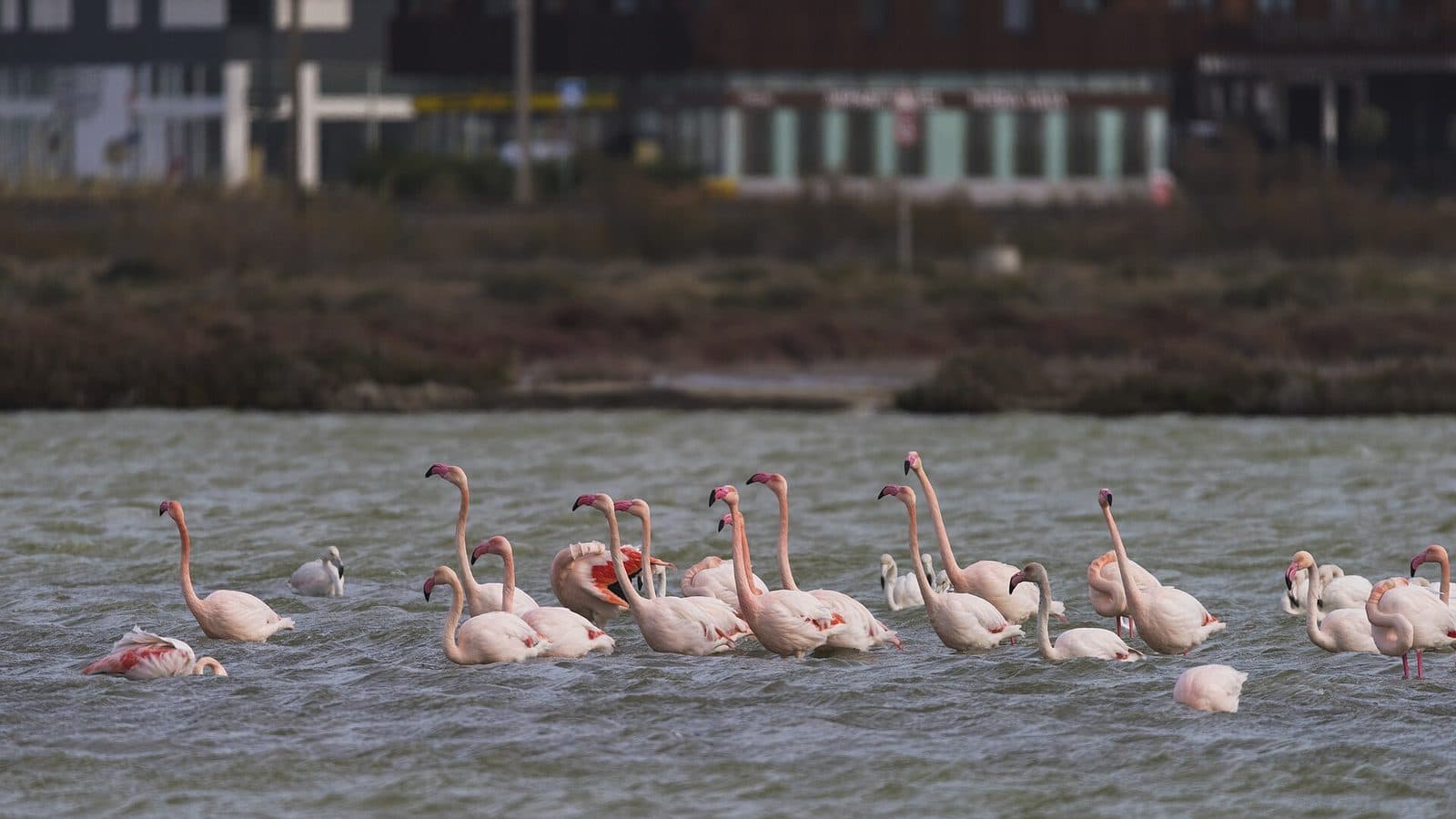
Outside the breeding season greater flamingos gather mostly on coastal lagoons and marshes, and on estuaries, salt flats and saltworks. They feed with the head upside down, pumping water and mud through the bill to filter out algae, small crustaceans and insect larvae. The pink in their feathers comes from pigments in that food.
Water depth decides where they stay. Flamingos filter their food from the bottom mud and need shallow water, so when the water level no longer suits them, the flock moves on to a better place. They wander widely through the year. In the colder parts of their range, a rare hard frost that freezes the shallows can be dangerous.
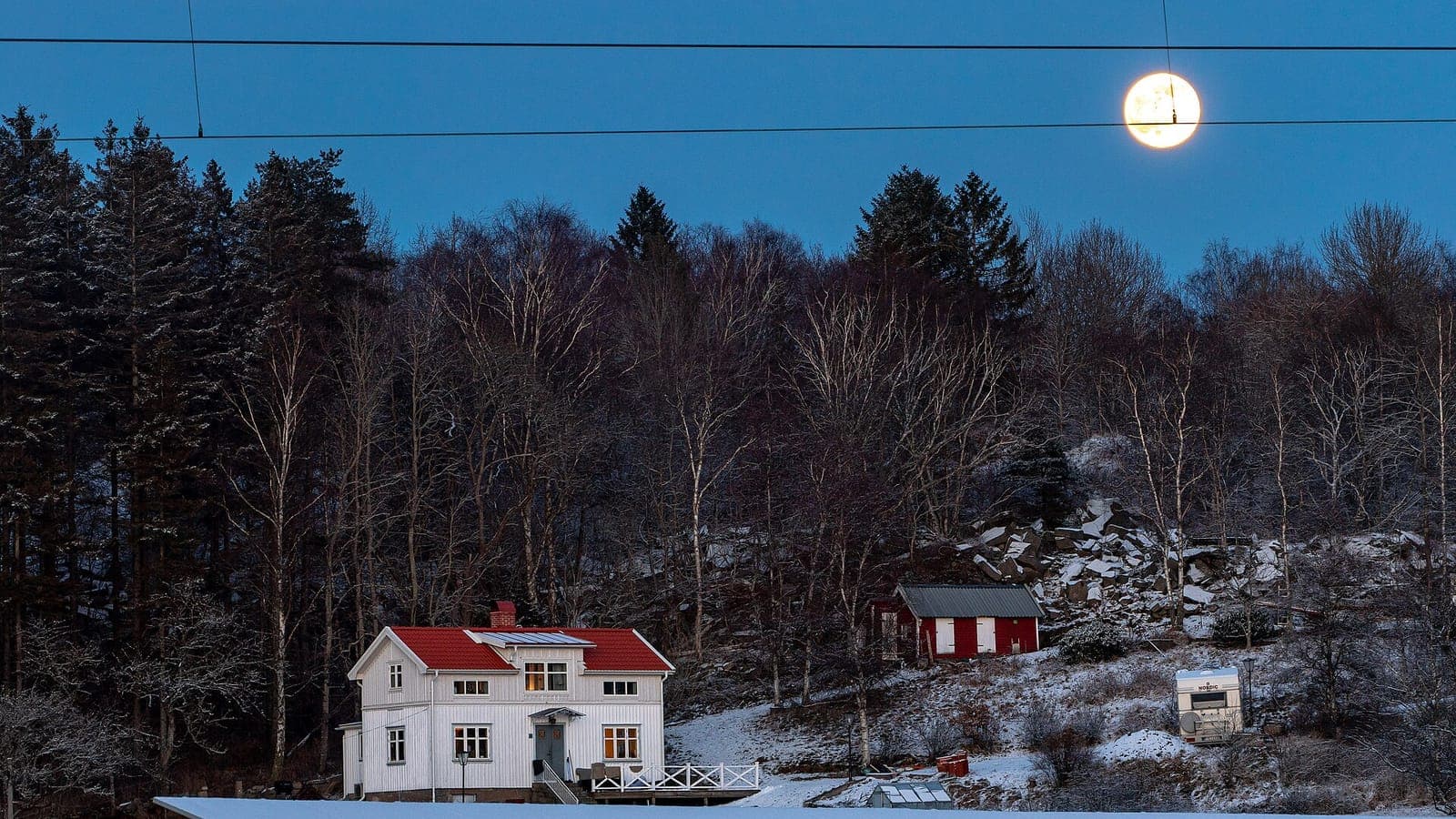
 Full moon