
When northern waters freeze, great cormorants leave the coast and move south or inland to any freshwater that stays unfrozen and well stocked with fish. In warmer places they simply disperse locally. As air and water cool, the average weight of the fish they take rises, and their winter plumage grows more uniformly black, slightly duller and less glossy.
Coping with the cold means choosing bigger prey. In summer they eat whatever fish of suitable size they can catch, but in winter they noticeably select larger, mostly torpedo-shaped fish, so foraging efficiency rises through size rather than numbers. The white filoplumes of the breeding season are shed for winter.
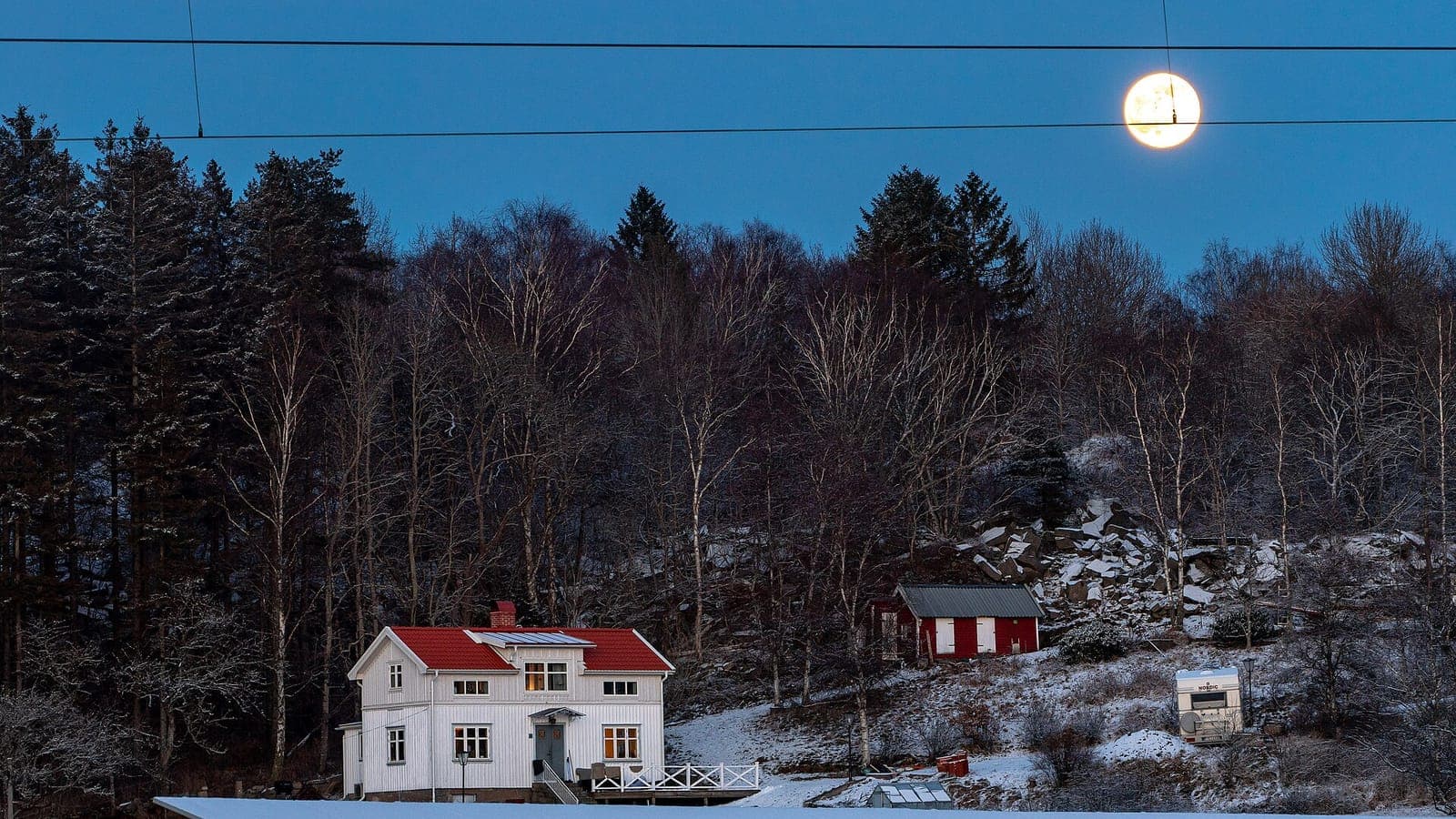
 Full moon