
 Austria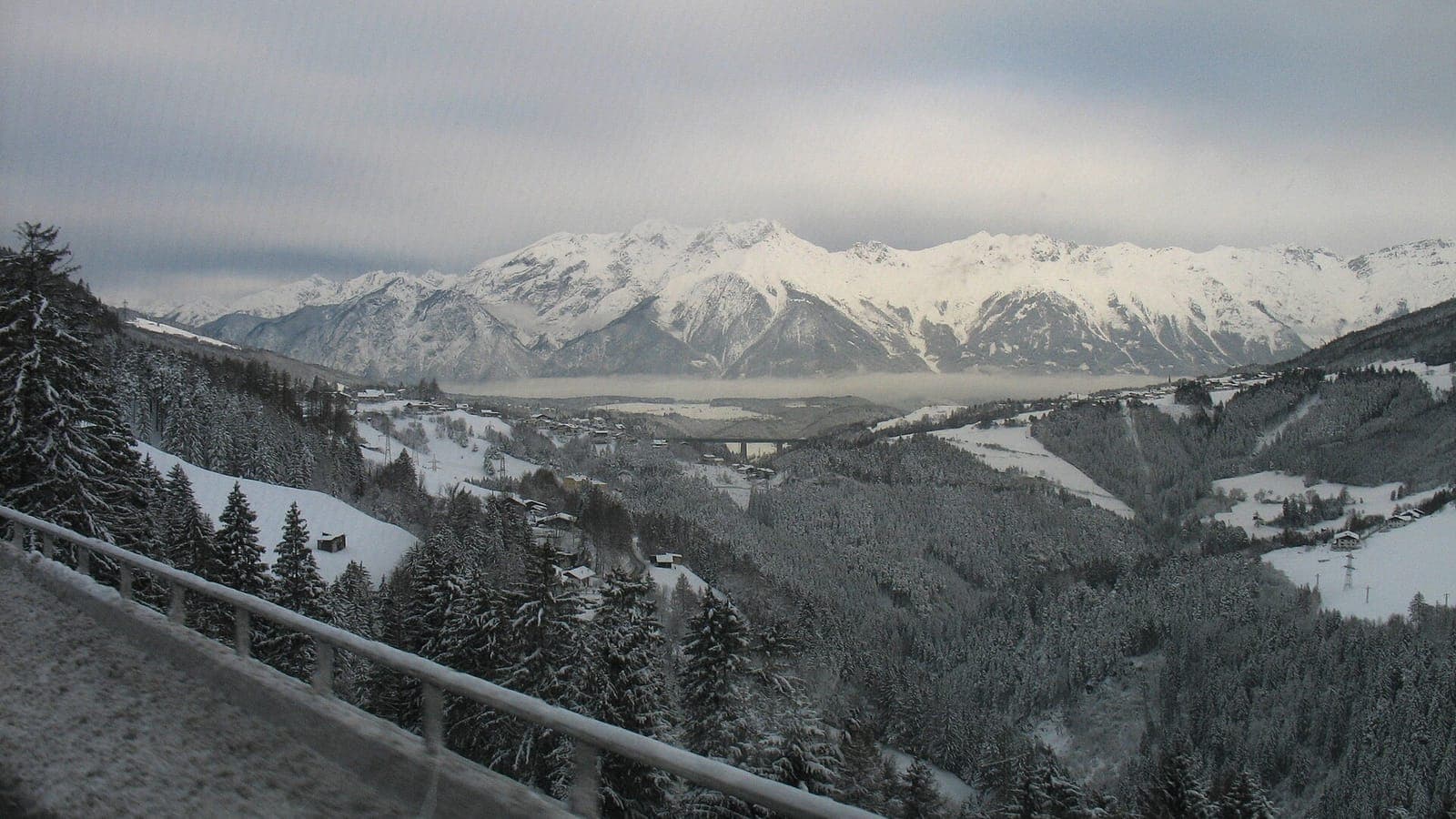
Few winds have a reputation as strong as the Alpine föhn. It is warm, dry and gusty, it can eat a snowpack in an afternoon, and for centuries it has been blamed for everything from sleepless nights to quarrels. In Austria, and above all in Tyrol, it is part of everyday life.
A wind born on the crest of the Alps
The föhn begins far from the valleys where it is felt. When a low-pressure system approaches from the west or south-west, mild, moist air from the Mediterranean is pushed against the southern flank of the Alps. As it climbs, it cools and sheds its moisture as rain or snow on the Italian side. On the crest, a dense bank of cloud forms, the so-called föhn wall. Then the air spills over the passes and plunges down the northern valleys. Because it has already lost its water, it warms quickly as it sinks – roughly one degree Celsius for every hundred metres of descent.
The result is a dry, gusty, unusually warm wind that can arrive within an hour and change the day completely. The name itself is old: it is generally traced back to the Latin favonius, the mild west wind of the Romans, passed on through the Romansh of the Alps. Meteorologists now use föhn for this kind of downslope wind anywhere in the world, from the chinook of the Rockies to the zonda of Argentina. But the classic föhn, the one that gave the phenomenon its name, is the south föhn of the Alps – and Austria's Tyrol is where it shows its full force.
Innsbruck, the föhn city
Few places feel the föhn as intensely as Innsbruck. The city lies at the mouth of the Wipptal, the valley that runs south to the Brenner Pass, one of the lowest crossings of the main Alpine ridge. When the pressure difference between the Italian side and the Inn valley grows large enough, air is forced through this funnel and accelerates. Gusts in the city can reach storm force; cranes are secured, trams are slowed, and mountain lifts stop running. Locals recognise the signs long before the wind arrives: a strange clarity in the air, mountains that look closer than they should, lens-shaped clouds hanging motionless over the ridges.
The most visible signature is the föhn window, the Föhnfenster: a band of clear blue sky along the northern edge of the Alps while a wall of cloud sits over the crest behind it. Temperatures can jump by ten degrees or more in a few hours. In winter this can mean a January afternoon in the mid-teens Celsius, with snow melting off the roofs and dripping from the eaves. In German the föhn is nicknamed the Schneefresser, the snow-eater, a name that says everything about what it does to a snowpack.
The wind that gets under your skin
Ask people in Tyrol or Salzburg about the föhn and the conversation soon turns from the weather to how they feel. Headaches, restless nights, irritability, a heaviness in the limbs: this cluster of complaints has a name, Föhnkrankheit, föhn sickness, and it has been part of Alpine folklore for centuries. Teachers say classes become unruly, surgeons are said to postpone operations, and the wind has been blamed for everything from arguments to traffic accidents. Whether these stories hold up is a different matter. Studies over the decades have produced mixed results, and the mechanism – if there is one – remains unclear.
What is certain is that the föhn changes the physical environment abruptly. Pressure falls, temperature rises, humidity drops sharply and the air fills with dust and pollen carried down from the mountains. Some researchers point to the rapid pressure change; others suspect the sudden warmth disrupts sleep. Many simply note that people who expect to feel bad often do. Either way, the föhn is one of the few winds anywhere with a recognised place in the vocabulary of everyday health, and Austrians will still tell you, only half joking, that they are feeling föhnig today.
Snow-eater, fire-bringer, north föhn
For all its warmth, the föhn is treated with respect in the mountains. When it melts and soaks a snowpack in a matter of hours, the risk of wet-snow avalanches rises steeply, and avalanche warning services in Austria watch föhn forecasts closely. The dry air and strong gusts also raise the danger of wildfire in late winter and spring, when last year's grass lies dead on the south-facing slopes. Historic town fires in the Alpine region were often fanned by föhn, which is why some villages once banned open fires while the wind blew.
Austria also knows the föhn's mirror image. When the pressure pattern flips and air is pushed across the Alps from the north, a north föhn descends into Carinthia and East Tyrol, bringing clear, dry weather to Lienz while the northern slopes are buried in rain and snow. Forecasters track the pressure difference across the main ridge to predict both, and on the day itself the sky gives it away: a sharp blue window, a wall of cloud on the crest, and lenticular clouds stacked like plates above the peaks.
Visitors to Innsbruck can spot the föhn without a forecast: the sudden warmth on a winter day, the unnaturally clear view up the Wipptal, the band of blue sky against a grey wall of cloud over the Brenner. Locals feel it in a different way, and if the waiter seems short with you, they may just tell you it's the föhn.

 Czechia
 United Kingdom