
 Brazil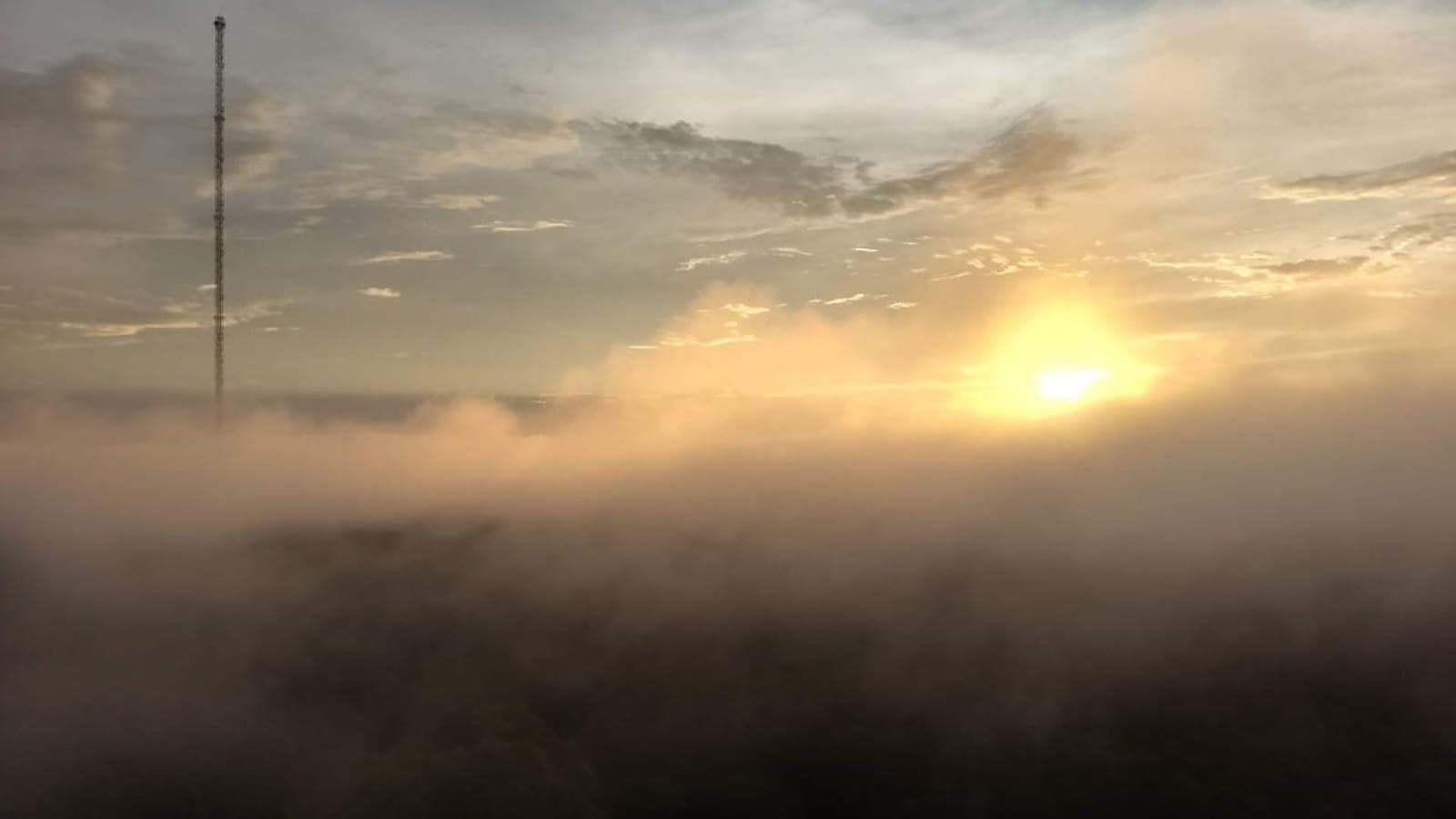
The Amazon is the last place most people expect to feel cold. Yet between May and September, cold air masses born over Antarctica and the Southern Ocean travel thousands of kilometres north and spill into the western part of the basin. Brazilians call the event a friagem, and for a few days it turns the world's biggest rainforest into a place where people reach for blankets.
An icy visitor from the south
A friagem starts far from the Amazon. Over the polar ocean south of South America, a dense mass of cold, dry air builds up. When a strong high-pressure system pushes it northwards, it crosses Patagonia and the Pampas and races on towards the tropics. Normally such an air mass would spread out and lose its bite. In South America, though, the Andes stand in its way like a wall, and instead of dispersing westward the cold air is channelled north along the mountains' eastern flank.
That corridor between the Andes and the Brazilian highlands leads straight into the south-western Amazon. The cold air is shallow, only a couple of kilometres deep, so it slides beneath the warm, humid tropical air and lifts it up. The result is a cold front that can travel from Argentina to the state of Acre in three or four days. Meteorologists watch these fronts closely each winter, because the same surge often brings frost to Brazil's southern farmland before it reaches the rainforest.
Where the rainforest feels the cold
The states most exposed are Acre, Rondônia, Mato Grosso and the south of Amazonas, together with lowland Bolivia and Peru next door. In Rio Branco, the capital of Acre, a strong friagem can push the thermometer down to around 10 °C, and occasionally lower. That is not cold by European standards, but for a city where the daily maximum normally sits above 30 °C it is a shock. The air also turns unusually dry, and the sky is often grey and drizzly instead of bright and stormy.
The further north and east the cold air travels, the more it warms and weakens. Manaus, in the heart of the basin, usually notices a friagem only as a few days of cooler nights and a lower-than-usual afternoon, not as real chill. The strongest events, however, are felt across most of the southern half of the basin. A friagem typically lasts from two to five days before the tropical heat reasserts itself, and several can occur in a single winter.
Fish, fog and blankets
For people in the western Amazon, a friagem is mostly an inconvenience with a certain charm. Markets sell out of jackets, families gather around stoves in houses built to let air through rather than keep it out, and rivers give off thick morning fog as the cold air meets warm water. The morning after the front passes is often the loveliest of the year in Rio Branco: the sky is clear, the humidity is gone and the air feels almost like a mountain town.
For wildlife the cold is more serious. Fish in shallow lakes and slow channels are adapted to warm water, and a sudden drop of several degrees can be fatal; fishermen report dead fish floating after severe friagens. Cold-blooded animals such as reptiles slow down, and some birds and monkeys fall silent. Because the event is short, ecosystems recover quickly, but researchers see the friagem as a reminder that even the tropics have a seasonal pulse driven from the poles.
The frost that froze the coffee
The same polar surges that cool the Amazon can do far more damage further south. On the night of 17 to 18 July 1975, a cold air mass of exceptional strength settled over the state of Paraná, then Brazil's main coffee region. Temperatures fell well below zero and the frost, remembered as the ‘geada negra’ or black frost, killed millions of coffee trees outright. Coffee prices soared worldwide, and much of Brazil's coffee growing shifted north to Minas Gerais in the years that followed.
Snow, too, is not unknown in Brazil. The highlands of Santa Catarina and Rio Grande do Sul see it in many winters, and the small town of São Joaquim has built a reputation as the country's snowy corner. All of these are the southern face of the same story: a continent with no mountains to block cold air from the pole, so that once in a while the winter of Patagonia comes to visit the tropics.
Visitors to Rio Branco or Porto Velho in June or July should pack a light jacket alongside the mosquito repellent. When the sky turns grey and the river fog lingers into the morning, locals will tell you the friagem has arrived, and for a few days the Amazon shows a side that hardly anyone associates with it.

 Egypt
Egypt
 Hungary