
 China
China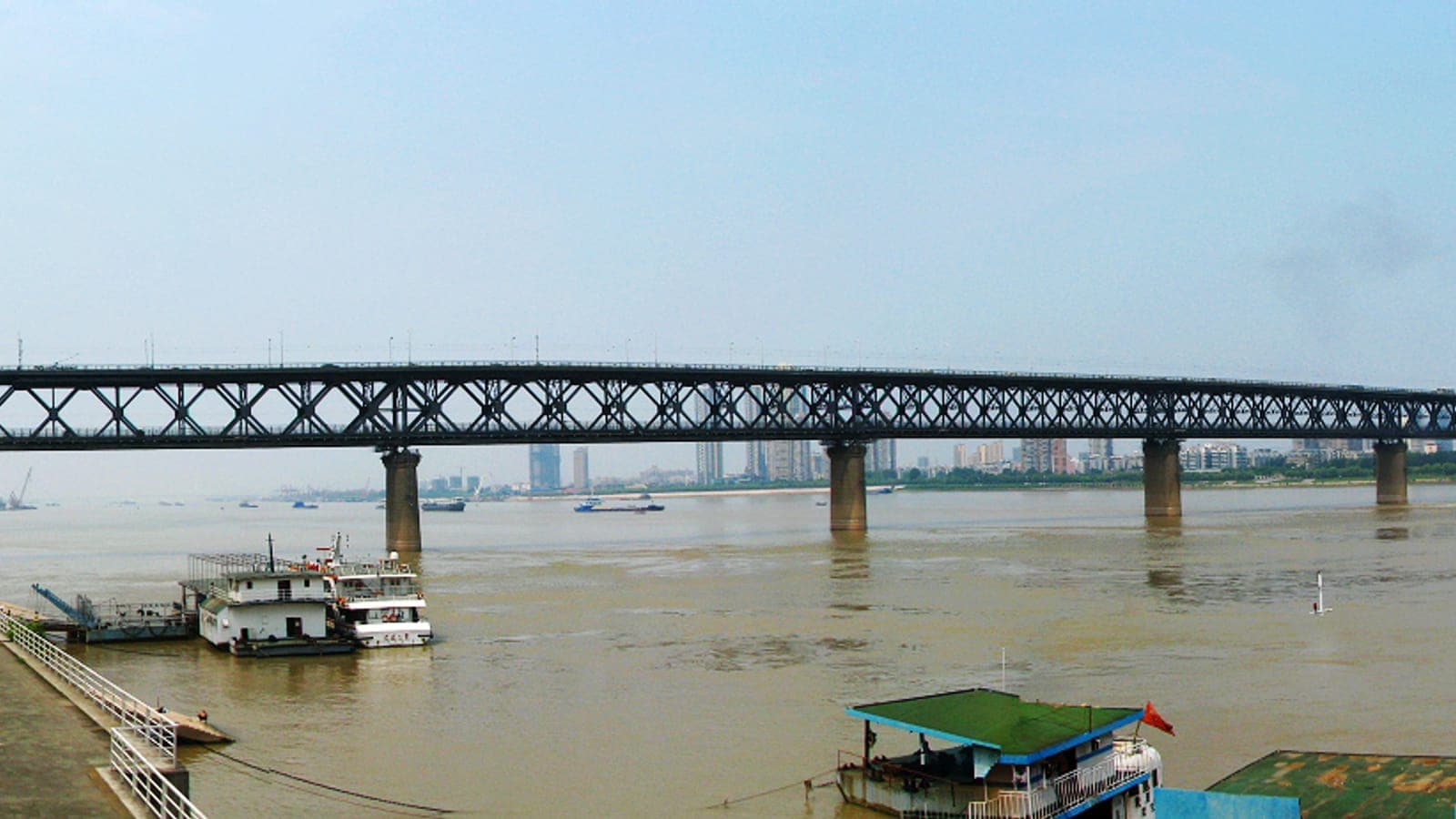
Along the Yangtze, summer does not simply arrive. It is announced by a month of grey skies, dripping walls and steady rain that the Chinese call meiyu, the plum rain. Most years it is a nuisance. In 1931 it became the backdrop to one of the deadliest natural disasters ever recorded.
A front that refuses to move
Each year in early June, warm and humid air from the Pacific, steered around the western edge of the subtropical high, meets cooler air still lingering over northern China. The two air masses do not mix. Instead they form a nearly stationary front that settles across the Yangtze valley, from Sichuan in the west to Shanghai on the coast. Along it, rain falls day after day, often gently, sometimes in violent bursts. The Chinese call it meiyu, the plum rain, because it arrives just as the plums ripen. The same rain belt reaches Japan as tsuyu and Korea as jangma.
The season typically begins in mid-June and lasts three to four weeks, though it can be as short as a few days or drag on for two months. It ends abruptly when the subtropical high leaps northward, taking the front with it and ushering in the scorching, dry heat of high summer. For farmers the timing is everything: rice seedlings need the water, but a plum rain that lingers rots the crop and swells the rivers. A homophone gives the season its second name, mould rain, for the way clothes, walls and books turn green in the damp.
The summer of 1931
The disaster of 1931 grew from a strange sequence. Central China had suffered drought from 1928 to 1930, then an unusually snowy winter piled deep drifts in the mountains where the Yangtze and its tributaries begin. Spring brought heavy rain on top of the melt. Then the plum rain came – and stayed. The stationary front did not release its grip in July as it should have, and the rain went on for weeks, soaking the ground until it could hold no more.
What turned a very wet year into a catastrophe was the sea. The western Pacific produced an extraordinary number of tropical cyclones that July – nine struck the region in that month alone, against an average of about two a year – and each one pumped fresh moisture into the already saturated basin. By late July the Yangtze, the Huai and the Yellow River were all rising together, something China's ancient dyke system had never been built to withstand. Levees maintained by local communities gave way one after another.
Wuhan under water
At the end of July the Yangtze broke through the defences protecting Wuhan, then a tri-city of Hankou, Hanyang and Wuchang and one of the largest inland ports in the world. Water filled streets and railway lines and stayed for months. Residents moved onto rooftops, boats and hastily built platforms; sampans became taxis between upper-floor windows. The aviator Charles Lindbergh, touring Asia with his wife Anne, flew survey flights over the flood zone for the relief effort and described a landscape that looked like an inland sea.
Further east, on 25 August, the great dyke at Gaoyou on the Grand Canal collapsed, and the waters of Gaoyou Lake and the Huai poured over the plains of northern Jiangsu. Estimates of the death toll vary enormously, from around 150,000 drowned to several million once disease and famine in the following months are counted. Tens of millions of people were affected across an area the size of a large European country. Cholera swept the refugee camps the following year. By most measures it remains one of the deadliest natural disasters in recorded history.
The river since
The Yangtze has flooded badly since – in 1954, when Wuhan again fought for its life behind sandbag walls, and in 1998, when a long plum rain in a strong El Niño year killed thousands and displaced millions. The response has been engineering on a scale to match the river: thousands of kilometres of raised, reinforced dykes, flood-diversion basins, and above all the Three Gorges Dam, whose vast reservoir can hold back part of the summer crest before it reaches the plains downstream.
The plum rain itself is now watched obsessively. Meteorologists declare its official start and end each year, and the length of the season is a headline in its own right. In 2020 an exceptionally long meiyu again pushed the Yangtze and its lakes to record levels, testing dams and dykes as they had never been tested. The front is the same one that drowned Wuhan in 1931; what has changed is that China can now see it coming weeks ahead.
Visit Shanghai, Nanjing or Wuhan in late June and you will feel it at once: air like a warm towel, umbrellas on every arm, a faint smell of mildew in stairwells. Locals run dehumidifiers, hang nothing outside and check the daily bulletin for the day the front finally lifts. When it does, summer proper arrives overnight.

 France
 India
India