
 Denmark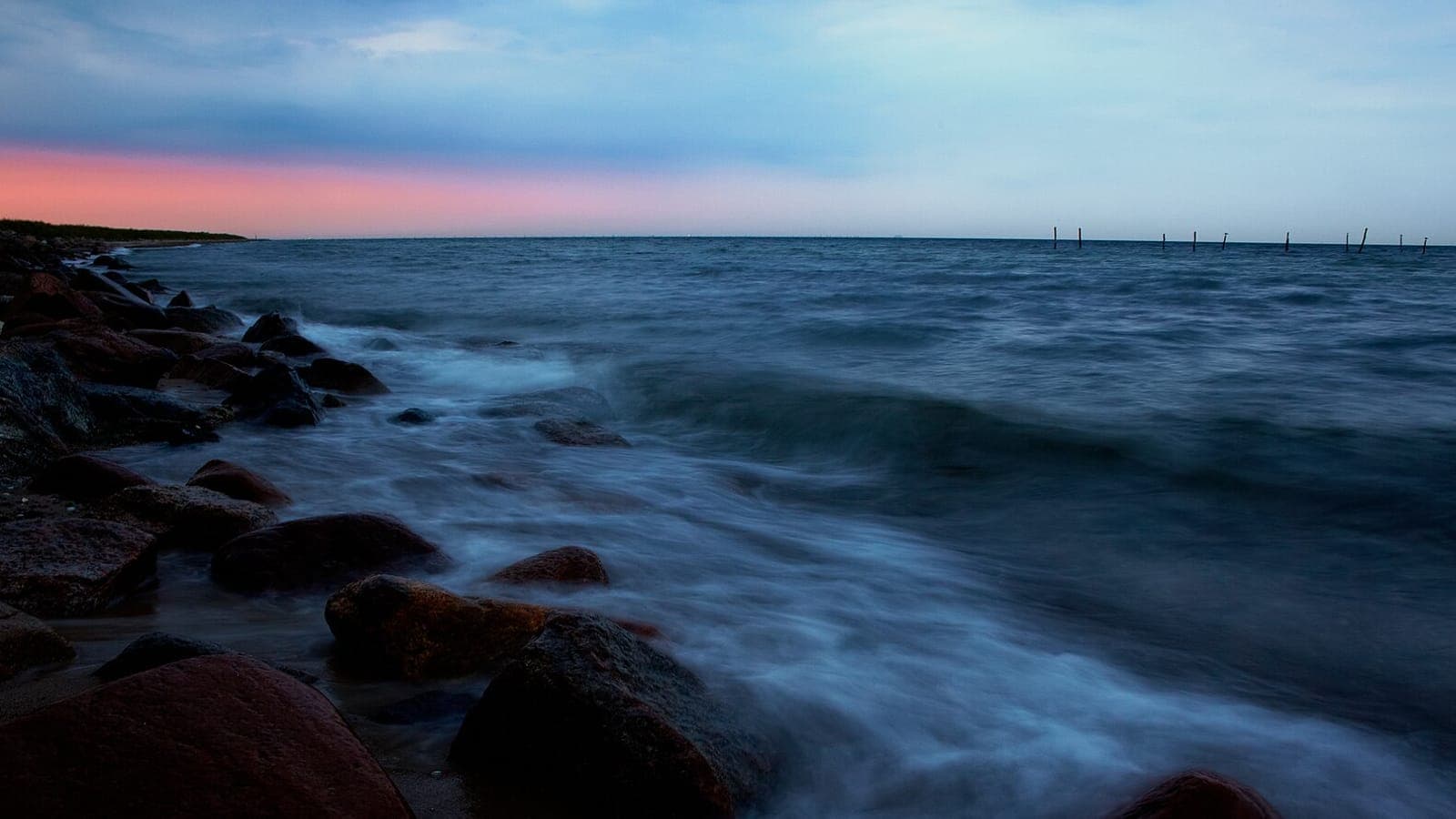
Danes are used to weather arriving from the west. Atlantic lows sweep across Jutland, and it is the North Sea coast that has learned to fear the sea. Yet the deadliest storm surge in modern Danish history struck the quiet islands of Lolland and Falster, from the east, on 13 November 1872.
A wind from the wrong side
The Baltic Sea is almost tideless, so its water level is set mostly by wind. In the first days of November 1872, strong westerly winds blew for days across northern Europe, pushing water from the North Sea through the Danish straits and piling it up in the eastern Baltic. The sea around the Gulf of Finland stood unusually high, while levels along the Danish islands were briefly low. Nobody saw anything dangerous in that. It was simply autumn weather, and the west wind was doing what it always does.
Then the pattern flipped. A high-pressure area built over Scandinavia while a deep low moved across central Europe, and between them the wind swung to the north-east and strengthened to storm force. All the water that had been shoved eastwards now came sliding back west. In the narrow, shallow south-western corner of the Baltic, between Lolland, Falster and the German coast, it had nowhere to go but onto the land.
13 November 1872
During the night and morning of 13 November the sea rose along the coasts of Lolland and Falster faster than anyone alive had seen. On the south coast of Lolland the water stood more than three metres above normal, higher than the low dikes and far above the fields behind them. Whole villages were flooded. Farms stood in open water, boats were carried inland, and in some low-lying parishes people climbed onto roofs and into trees to wait for the wind to ease.
Around eighty people lost their lives on Lolland and Falster alone, and the German Baltic coast from Kiel to the island of Rügen was hit just as hard, with even more victims there. Livestock drowned in their thousands and the salt water ruined farmland for years. Because the Baltic normally behaves so gently, there was no warning system, no tradition of storm-surge defence and, in most places, no real dikes at all.
The dike that redrew Lolland
The response came quickly. Work on a continuous sea dike along the south coast of Lolland began in 1874, and it was finished in 1878. It runs for roughly 63 kilometres from Nakskov Fjord in the west to Keldskov in the east, a long green wall through the flat landscape. On the south-eastern coast of Falster a shorter dike was built. Both still protect the islands.
The dike did more than hold back the sea. Behind it, the shallow Rødby Fjord was gradually drained and turned into farmland, so the map of southern Lolland changed permanently. In towns and churches along the coast, small marks and plaques record how high the water stood. They sit surprisingly high, and they are the most direct way to understand what happened that November night.
Why the west wind rules Denmark
Denmark sits squarely in the belt of westerlies that circle the globe in the mid-latitudes. Most of its weather is born over the Atlantic, where warm and cold air meet and low-pressure systems spin up, then travel east across the British Isles and the North Sea. That is why Danish winters are mild for the latitude, why rain comes in bands rather than downpours, and why the west coast of Jutland is the country's windiest place, with trees leaning permanently eastwards.
It is also why the dangerous coast is normally the western one. When a deep low passes north of Denmark, the wind behind it turns to the west and north-west and drives North Sea water into the Wadden Sea, where the great historic floods of 1634 and later occurred. The 1872 surge was the rare mirror image: the Baltic side, usually protected by the land, taking the blow from a wind that in Denmark hardly ever blows that hard from the east.
Walk the top of the Lolland dike today and the Baltic looks like a lake, flat and grey-blue, with cows grazing on the landward slope. That calm is the point. The flood marks in Rødby and Gedesby, the drained fjord and the endless green wall are all reminders that even a sea without tides can, given the wrong wind, rise in a single night.

 Croatia
 Japan
Japan