
 Japan
Japan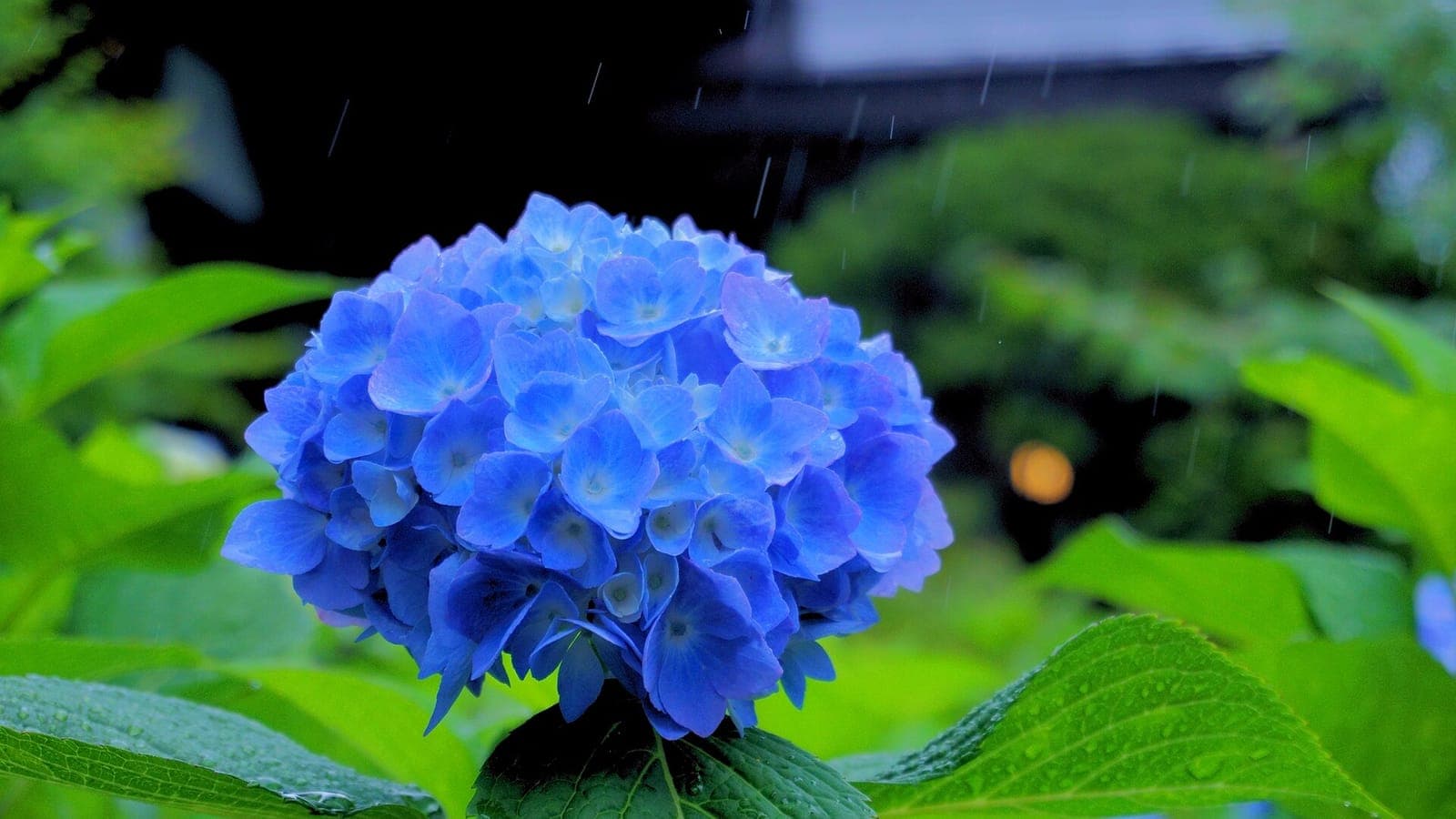
Japan has four seasons, and people there will happily tell you so, but its weather calendar really has six. Between spring and high summer comes tsuyu, the plum rain, and between summer and autumn comes typhoon season. Both grow out of the same tug-of-war between cool northern air and the warm Pacific, and both have shaped how the country lives, builds and plans.
The plum rain
Tsuyu is written with the characters for ‘plum’ and ‘rain’, because it arrives as the ume plums ripen. Some trace the name to a near-identical word for mould instead, and anyone who has lived through a Tokyo June will see the logic. The season usually begins in Okinawa in May, reaches Kyushu, Shikoku and Honshu in early June, and lasts until mid or late July. Hokkaido, in the far north, largely escapes it.
The Japan Meteorological Agency announces when the rains have probably begun and ended in each region, and the news is followed closely: tsuyu-iri, ‘entering the rainy season’, and tsuyu-ake, its end. The announcements are provisional, and the agency revisits them after the summer once it has studied the full record. Nor is it six weeks of downpour. Many days are simply grey, mild and damp, with drizzle, heavy air and laundry that refuses to dry.
A front that will not move
Behind the rain lies a long, stationary band of cloud known as the baiu front. To its north sits cool, moist air linked to high pressure over the Sea of Okhotsk; to its south lies the warm, humid air of the Pacific high. As long as the two are evenly matched, the front stalls over Japan and rain falls along it for days on end. The same front brings the meiyu to China's Yangtze valley and the jangma to Korea.
The season ends when the Pacific high finally wins and pushes the front north, but the last weeks are often the most dangerous. Warm, moisture-laden air feeds lines of thunderstorms that can sit over the same valley for hours. In early July 2018, rain of this kind caused floods and landslides across western Japan, notably in Hiroshima, Okayama and Ehime, and more than 200 people died. Forecasters now watch closely for these stubborn rainbands.
Typhoons by number
Once tsuyu is over, the Pacific high brings Japan its hot, sticky summer, and the ocean to the south keeps warming. That warm water is the fuel for typhoons, the western Pacific's name for tropical cyclones. Roughly 25 form in a typical year. Only a few make landfall on Japan's main islands, but many more pass close enough to bring torrential rain and violent winds, especially in August and September, when the season peaks.
Japan's weather agency does not use names for typhoons in everyday forecasts; it numbers them in the order they form each year, so the news talks of ‘Typhoon No. 10’. The storms also have a place in the nation's story. When Mongol fleets tried to invade Kyushu in 1274 and 1281, storms are said to have helped defeat them, and the 1281 storm in particular is widely thought to have been a typhoon. It was remembered as kamikaze, the divine wind.
The Isewan Typhoon of 1959
The deadliest typhoon in modern Japanese history struck on 26 September 1959. Known internationally as Typhoon Vera and in Japan as the Isewan Typhoon, after Ise Bay, it came ashore on the Kii Peninsula in the evening and raced north-east across Honshu. Its fierce southerly winds drove the sea into the funnel-shaped bay, raising a storm surge that overtopped the seawalls around Nagoya and flooded the low-lying land along the shore.
Much of that land lay close to or below sea level, and the water came at night. Logs from timber yards were swept into residential streets, adding to the destruction. More than 5,000 people died or went missing. The disaster changed Japan's approach to risk: in 1961 the country passed the Disaster Countermeasures Basic Act, which sets out how national and local government must prepare for and respond to disasters, and the defences around the bay were greatly strengthened.
Visit Japan in June and you will see the season everywhere: hydrangeas blooming in temple gardens, umbrella stands at every shop door, dehumidifiers stacked in the stores. When tsuyu-ake is announced, the cicadas start up and the real heat begins. Come September, residents keep an eye on typhoon track maps, and rail operators sometimes suspend services in advance, a quiet sign of how seriously the season is taken.

 Poland
 United States