
 Poland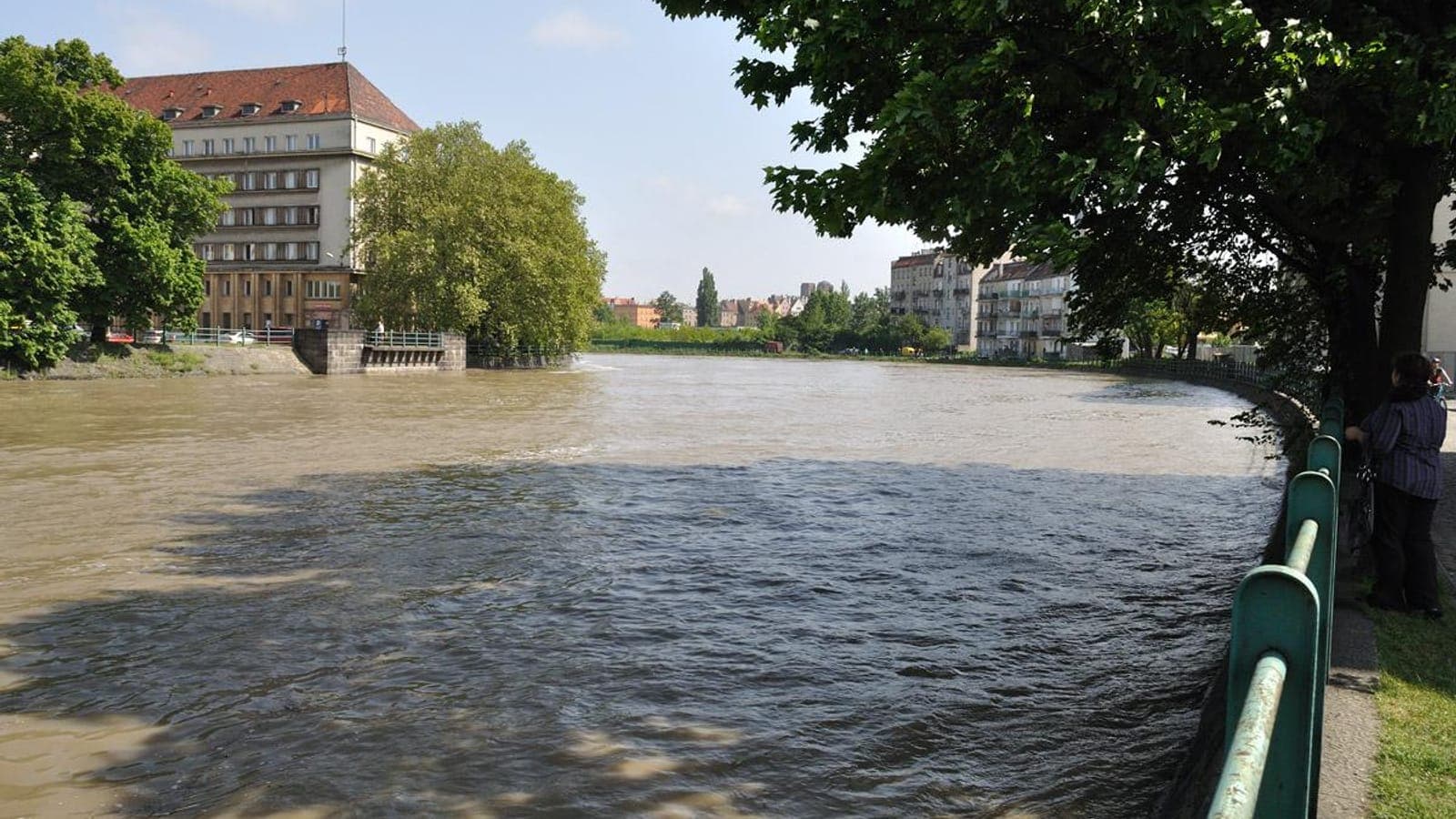
Poland's second-longest river usually flows wide and calm through Silesia toward the Baltic. In the summer of 1997 it became a monster. The flood that followed is still called powódź tysiąclecia, the flood of the millennium, and it reshaped how the country thinks about rain.
A week of rain that would not stop
The summer of 1997 began quietly in Poland. Then, in the first days of July, a deep low-pressure system drifted up from the Mediterranean on the track meteorologists call Vb, a route that carries warm, water-laden air around the Alps and into Central Europe. Instead of passing through, the low stalled. From around 3 July it poured for days over the Sudetes, the Beskids and the Czech-Polish border mountains, with some stations recording in under a week what would normally fall in several months.
Mountain rivers respond fast. The Nysa Kłodzka, the Biała Głuchołaska, the Bóbr and dozens of smaller streams turned into brown torrents within hours, while the upper Oder, fed from the Czech side, began to rise at a pace nobody had planned for. Forecasters could see the numbers climbing, but the gauges soon passed the top of every reference table. Older records, long treated as the worst imaginable case, were simply left behind.
The wave rolls down the Oder
The first town to be overwhelmed was Kłodzko, where the Nysa Kłodzka burst through the historic centre on the night of 7 July, tearing away houses and bridges. Racibórz went under a day later, and by 10 July the Oder had flooded large parts of Opole, cutting the city in two. Downstream, everyone watched the timetable of the wave: it was known almost to the hour when the crest would reach Wrocław, and it was known that the river would not fit between the dikes.
The crest reached Wrocław on 12 and 13 July, and a second burst of heavy rain around 18 to 22 July sent a fresh surge down a river that had barely begun to fall. The flood then travelled north along the German border. At Słubice and Frankfurt an der Oder soldiers and volunteers held the dikes for weeks, but on 23 July an embankment gave way and the Ziltendorf lowland in Brandenburg filled with water. In all, the flood took nearly a month to pass through.
Wrocław's sandbag summer
Wrocław had one advantage: a system of flood channels and weirs built after the great flood of 1903, designed to steer high water around the historic core. In 1997 the volume was far beyond what the engineers of that era had imagined. Whole districts, Kozanów among the first, disappeared under several metres of water. Residents climbed onto roofs and balconies, and rescue crews moved through the streets in boats and amphibious vehicles while helicopters lifted people from rooftops.
What people remember most is the sandbags. Tens of thousands of inhabitants formed human chains along the embankments, night after night, filling bags and stacking them to protect Ostrów Tumski, the Old Town and the university quarter. Much of the city centre stayed dry because of it. There was also a bitter debate: authorities considered deliberately breaching dikes upstream to relieve the city, which would have flooded villages, and local farmers stood guard on the embankments to stop it.
What the flood left behind
When the water finally drained away, the toll was clear. In Poland 56 people had died, and roughly 160,000 had been evacuated; on the Czech side around 50 more lost their lives. Some 7,000 people lost their homes. Damage was estimated at roughly 12 billion złoty, a huge sum for a country still rebuilding its economy. The government was widely criticised for a slow and awkward response, and the flood became a political turning point as much as a natural one.
The most concrete legacy is engineering. Poland launched a long programme to modernise the Oder, strengthening embankments, widening channels in Wrocław and, above all, building the Racibórz Dolny dry reservoir, completed in 2020, which can hold back a flood wave before it reaches the cities. The idea was tested sooner than anyone hoped: in September 2024, when Storm Boris brought another round of extreme rain to the Sudetes, the new defences held back much of the crest.
Walk along the Oder boulevards in Wrocław today and you will find small plaques marking where the water stood in July 1997, well above head height. Every summer, when the forecast shows heavy, stalled rain over the Sudetes, Poles still glance at the river gauges. The flood taught the country that the quiet, wide Oder can become something else entirely.

 United States
 Belgium