
 New Zealand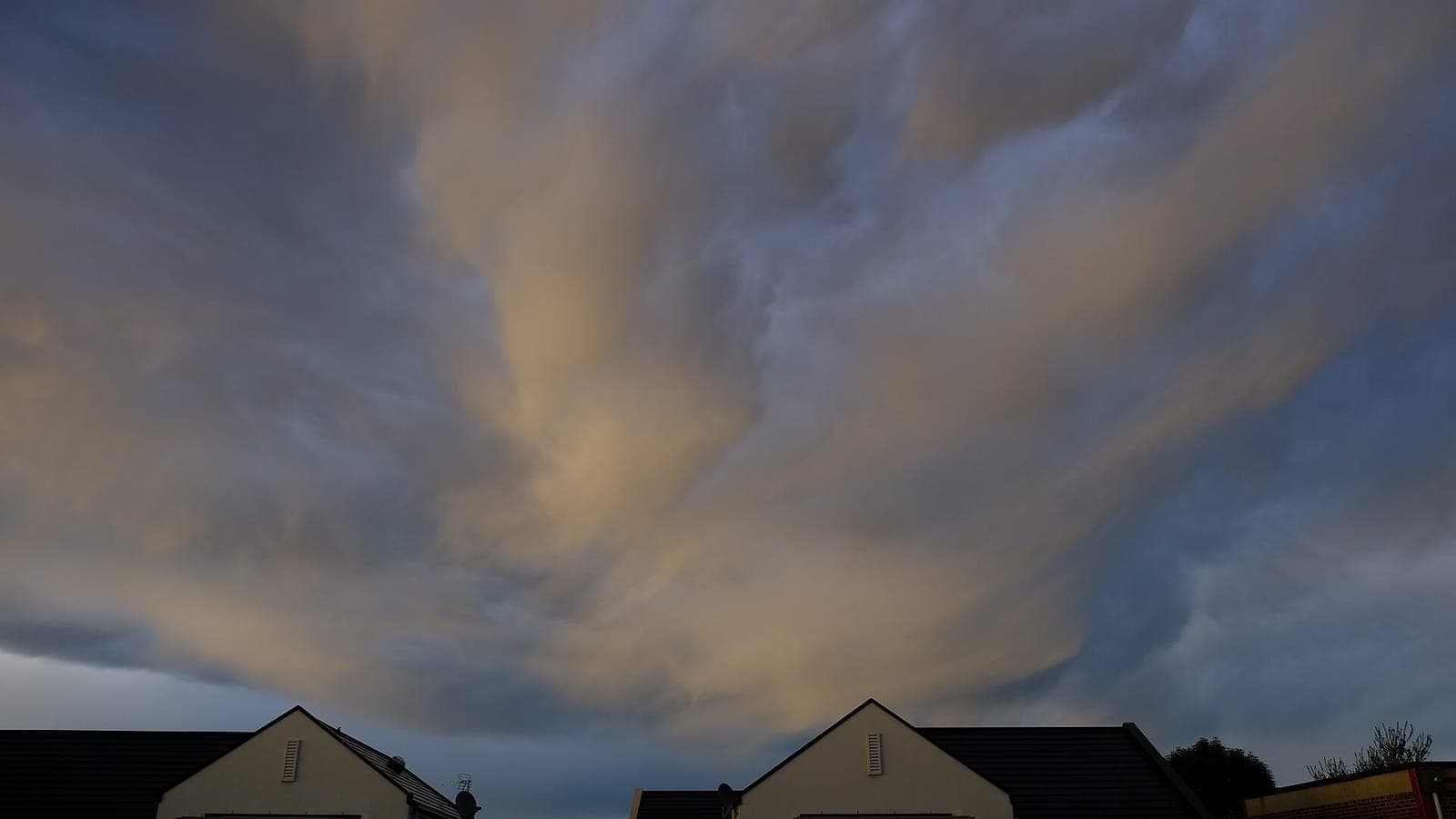
Between roughly 40 and 50 degrees south, the westerly winds blow around the planet almost unobstructed, over thousands of kilometres of open ocean. Sailors called them the Roaring Forties. New Zealand is one of the very few pieces of land standing in their path, and the collision between that wind and the Southern Alps produces one of the strangest local winds in the world: the Canterbury nor’wester.
A river of air with nothing in its way
In the Southern Hemisphere, between the latitudes of about 40° and 50° south, there is almost no land at all. Air pushed towards the pole from the subtropics is bent eastward by the Earth’s rotation and, with no continents to slow it, settles into a nearly continuous belt of westerly wind that circles Antarctica. Sailors in the age of clipper ships used it as a highway: ships bound for Australia and New Zealand dropped down into the forties to ride the wind east, then climbed back north.
New Zealand stretches from about 34° to 47° south, which puts the whole South Island and the lower North Island squarely inside this belt. Wellington, the capital, sits at the southern tip of the North Island beside Cook Strait, where the wind is squeezed between the two islands and accelerates. It is regularly described as the windiest capital city in the world, and gales strong enough to close the airport or halt the inter-island ferries are a normal part of the calendar rather than a news event.
When the wind meets the Southern Alps
The Southern Alps run the length of the South Island like a wall, with Aoraki / Mount Cook rising to over 3,700 metres. Westerly air arriving from the Tasman Sea is saturated with moisture, and when it is forced up the western flank of the mountains it cools, its water vapour condenses, and it rains enormously. The West Coast is one of the wettest inhabited regions on Earth: Milford Sound in Fiordland receives roughly six to seven metres of rain a year, and the town of Hokitika records close to three metres.
The contrast across the divide is stark. Christchurch, on the eastern side, gets around 600 millimetres a year, about a tenth of what falls in Fiordland only a few hundred kilometres away. Rainforest and glaciers on one side, dry tussock grassland and braided rivers on the other, all produced by the same air mass that simply lost its water on the way over. The rivers that cross the Canterbury Plains, such as the Waimakariri and the Rakaia, are fed by the mountain rain and snow and carry it to the Pacific.
The nor’wester: hot, dry and unsettling
Having dropped its rain, the air descends the eastern slopes and warms rapidly by compression, the same mechanism as the föhn in the Alps and the chinook in Canada. By the time it reaches the Canterbury Plains it is hot, bone dry and blowing hard. Canterbury folk call it the nor’wester. On a nor’west day Christchurch can be baking at over 30 °C while the West Coast is under heavy rain, and the humidity on the plains drops so low that lips crack and washing dries in minutes.
The most striking sign of the wind is the nor’west arch: a great band of clear sky arched between the cloud sitting on the Alps and a rolling wall of cloud further east, often glowing pink or orange at sunset. Locals also swear the wind changes people. Headaches, short tempers and restless children are all blamed on it, much as the föhn is blamed in Bavaria and Switzerland. On 1 August 1975 an exceptionally violent nor’west storm flattened plantation forests across Canterbury and is still the benchmark against which later windstorms are measured.
Living inside the wind
The clearest evidence of the nor’wester is written on the landscape. Fly into Christchurch and the plains below are ruled into rectangles by tall shelterbelts of pine and macrocarpa, planted to stop the wind stripping topsoil from the fields and to shield stock and crops. Before the trees went in, the wind could lift the soil off ploughed paddocks and carry it away as dust. The shelterbelts are as much a part of the Canterbury view as the mountains themselves.
Elsewhere the wind is an asset. New Zealand has some of the most productive wind farms in the world, and the turbines above Wellington and in the Manawatū Gorge run for a far greater share of the year than their European counterparts. The same westerlies also made the country a nation of sailors and gave Wellington its reputation as a place where you lean into the walk to work. The Roaring Forties have never stopped roaring; New Zealanders have simply learned to build, plant and live around them.
Visitors notice it within a day: the ferry across Cook Strait pitching in a swell, the tussock flattened along a mountain road, the shelterbelts marching across the Canterbury Plains, and, if they are lucky, a nor’west arch glowing over the Alps at dusk. Residents simply check which way the wind is blowing before deciding what kind of day it will be.

 Türkiye
 Australia