
 Türkiye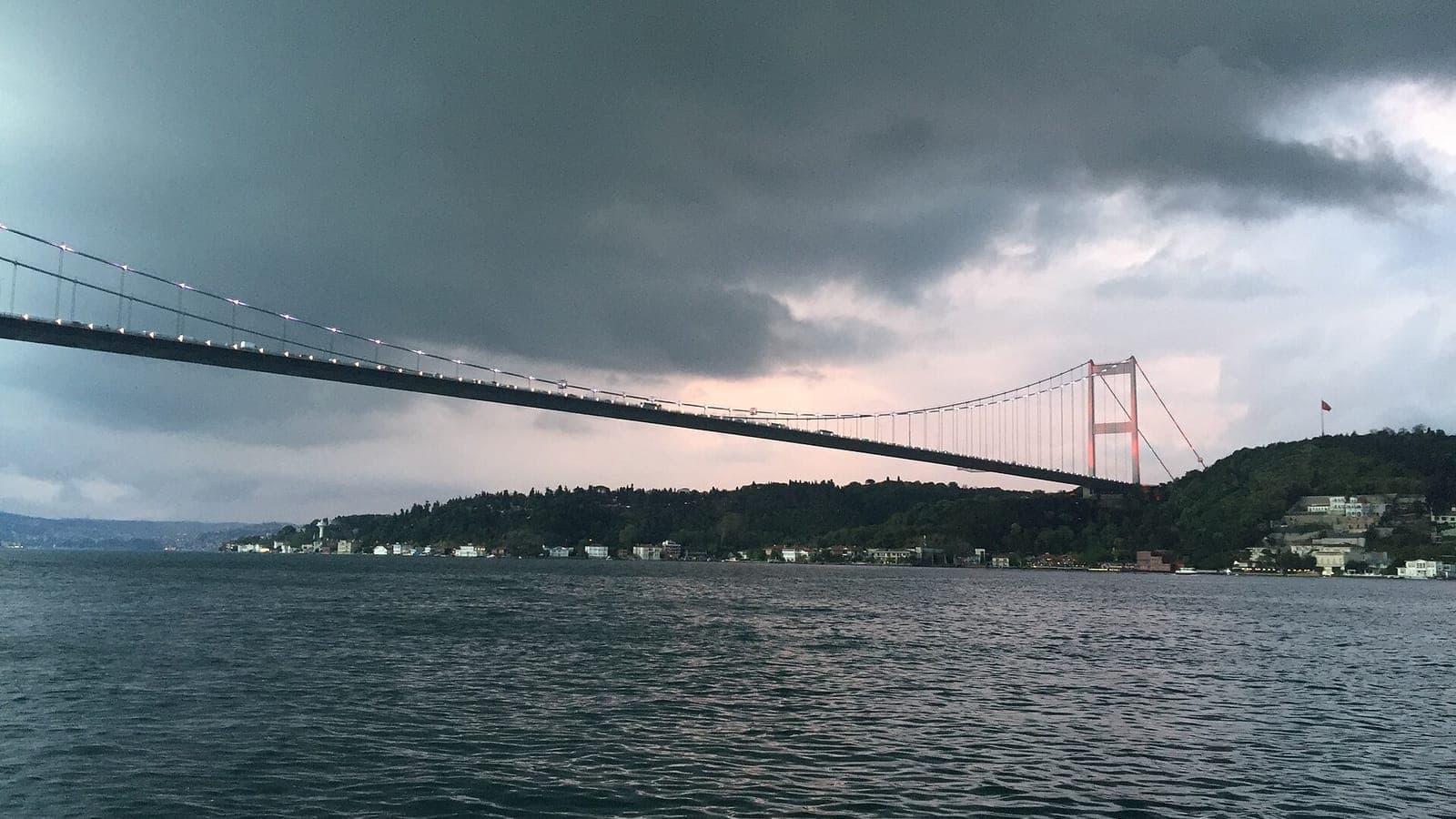
Istanbul lives between two seas and two winds. From the north-east comes the poyraz, cold and clear; from the south-west comes the lodos, mild and moist, carrying the breath of the Mediterranean up across the Sea of Marmara. When it blows hard, a city of more than fifteen million people is reminded that its most important road is made of water.
A wind with a Greek name
Turkish sailors still name their winds the way Byzantine and Genoese seamen did. Poyraz comes from Boreas, the north wind of Greek myth; karayel is the north-westerly; yıldız, the star, blows from the north; keşişleme from the south-east; kıble, the direction of Mecca, from the south. Lodos, the south-westerly, takes its name from the Greek nótos, the old word for the south wind. The vocabulary is a reminder that the Bosphorus has been a working seaway for well over two thousand years, and that every generation of mariners has had to learn the same hard lessons about its weather.
Of all these winds, lodos is the one Istanbul talks about most. It arrives when a low-pressure system crosses the Aegean or the Balkans and draws warm, humid air northwards over the Sea of Marmara. In winter it can lift the temperature by several degrees within hours, turning a grey January day into something that feels like April. But that gentleness is deceptive. Lodos is a fetch wind: it has the whole width of the Marmara to build waves, and by the time it reaches the city it can be blowing at gale force.
How the Bosphorus runs backwards
The Bosphorus is not simply a channel between two seas; it is a river with two floors. On the surface, less salty water from the Black Sea flows south towards the Marmara. Underneath, heavier, saltier water from the Mediterranean creeps north in the opposite direction. Fishermen and oceanographers have known about this layered current for centuries, and it explains why the water can look calm on top while a ship's anchor chain is being tugged the other way beneath it.
A strong, sustained lodos upsets this arrangement. The wind piles water into the northern corner of the Marmara, raises the sea level at the mouth of the strait and slows the surface current, sometimes stopping it, occasionally pushing it back towards the Black Sea. Locals have a word for this reversed flow: orkoz. When orkoz sets in, the familiar swirls off Sarayburnu and Kandilli change shape, moored boats swing on their lines, and the low quaysides along Kadıköy, Bostancı and Karaköy can find seawater lapping over the pavement.
Ferries tied up, ships at anchor
For Istanbul, the practical meaning of lodos is simple: the water traffic stops. Ferry lines across the Bosphorus and out to the Princes' Islands are the first to be cancelled, and commuters who normally cross in twenty minutes find themselves on crowded bridges instead. Sea buses stay in port. Large ships waiting to transit the strait drop anchor in the Marmara roadstead, and the authorities can close the Bosphorus to big vessels entirely until the wind eases. On such days the city's silhouette gains a new feature: rows of tankers and freighters riding at anchor off the old town.
The worst lodos storms do more than delay. Waves break over the coastal roads, roofs come loose, trees fall on parked cars, and cranes and scaffolding have to be lashed down. A ferocious lodos in late November 2021 tore through Istanbul and the wider Marmara region, killing several people and tearing off roofs and billboards across the city. Fishermen along the Marmara shore have always known the rule: when the sky in the south-west turns milky and the air goes soft and warm, get the boats up the beach.
The wind in your head
Istanbul folklore insists that lodos gets into people. Headaches, restlessness, sleeplessness and short tempers are all blamed on it, and "there's lodos" is an accepted explanation for a bad mood in the office or a sluggish morning. Doctors are cautious about the claim, but the same complaint is made about the föhn in the Alps and the sirocco in Italy, and the mechanism is at least plausible: a sudden jump in warmth and humidity, a falling barometer and a night of rattling shutters are not a recipe for good sleep.
Whatever it does to heads, lodos certainly changes the light. The air fills with fine haze and salt spray, the Asian shore fades to a grey outline, and the gulls hang almost motionless over the water. In winter the story often ends abruptly: the wind swings round to the north-east, the poyraz clears the sky in an hour, and the same night can bring snow. In summer lodos is a heavier guest, bringing muggy, sticky days when the city longs for the poyraz and its cool Black Sea air.
You will know lodos when you meet it: a warm, wet wind on the ferry deck, a Marmara flecked with white, a haze that swallows the far shore and a timetable board full of cancellations. Istanbullus shrug, order another tea and wait for the poyraz. For a visitor it is the clearest lesson the city can give about why its weather, its shipping and its moods have always belonged to the sea.

 Australia
 Germany