
 Portugal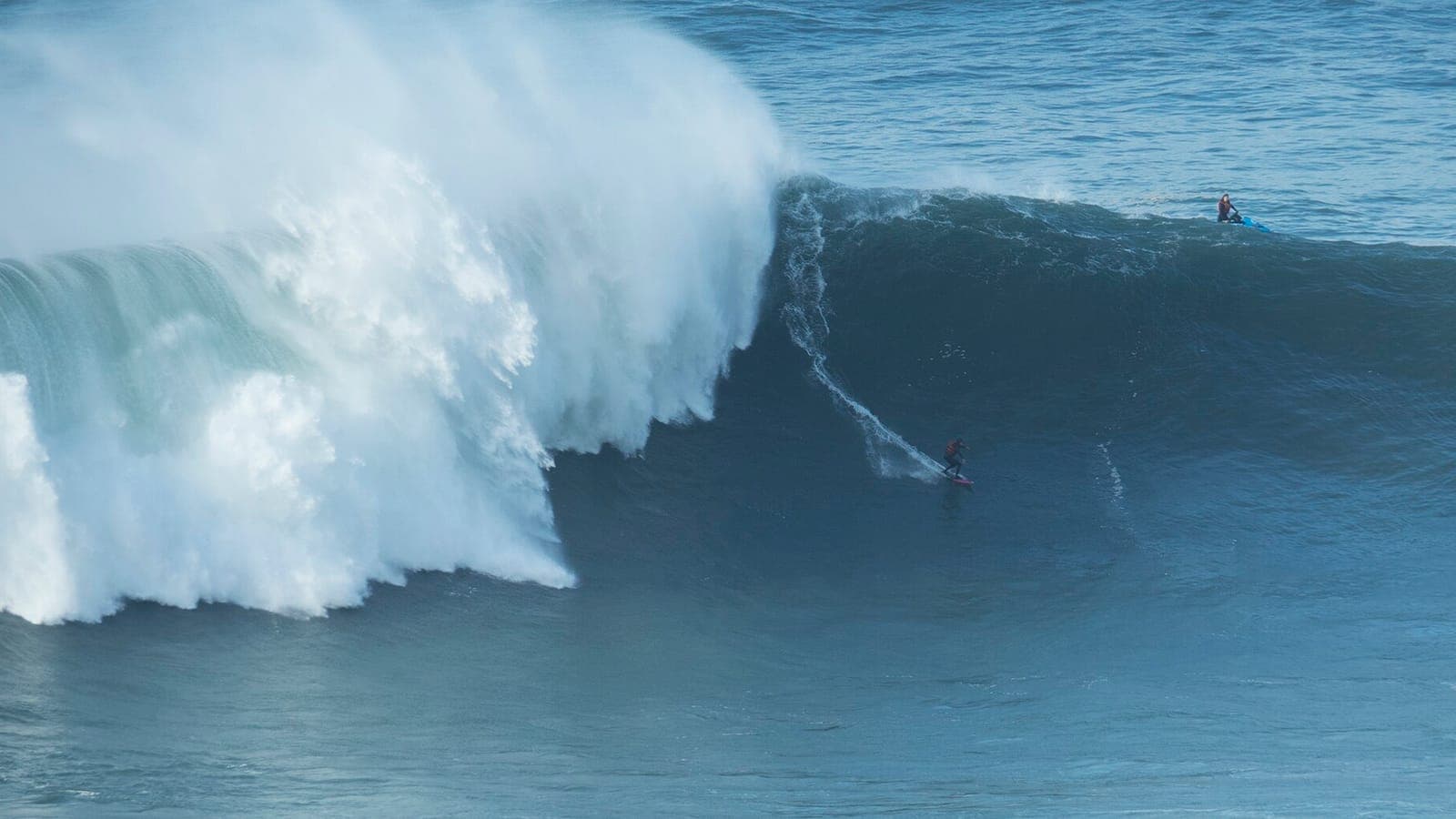
Portugal's coast lives by two Atlantic rhythms. In summer a steady northerly wind, the nortada, keeps the beaches breezy and the sea surprisingly cold. In winter the same ocean sends storm swells that a deep canyon off Nazaré shapes into waves the height of apartment buildings.
The wind that arrives every afternoon
From late spring to early autumn, a great dome of high pressure sits over the Atlantic near the Azores, while the sun-baked interior of the Iberian Peninsula develops low pressure. Air flows between the two, and along Portugal's west coast it becomes a persistent wind from the north or north-west. This is the nortada. It usually picks up around midday, blows hardest through the afternoon and eases after sunset, a rhythm so reliable that fishermen, sailors and beachgoers plan their days around it.
The nortada is strongest in July and August, when the temperature contrast between ocean and land is greatest. On exposed beaches such as Guincho near Cascais, or along the coast north of Porto, afternoons can turn into a sand-blasting test of patience for sunbathers. The same wind is a gift to windsurfers and kitesurfers, and it is one reason Portugal has invested so heavily in wind power along its coast and on the ridges behind it.
Why the sea is cold in August
The nortada does more than ruffle the water. Because the wind blows along the coast rather than onto it, the rotation of the Earth pushes the surface water offshore, and colder water rises from the depths to replace it. This process, called upwelling, keeps the sea off Portugal's west coast far cooler than its latitude would suggest, often well below 20 degrees even at the height of summer, while the Mediterranean shores of Spain are bathwater by comparison.
The cold sea shapes the coastal climate. Warm, humid air moving over the chilly water condenses into fog and low cloud, so a morning in Lisbon or Porto can begin grey and clammy while a town forty kilometres inland is already sweltering. Lisbon owes its comparatively mild summers to this effect. The upwelled water is also rich in nutrients, feeding the sardines and other fish that have sustained Portuguese fishing communities for centuries.
Winter storms and an undersea canyon
When autumn arrives the Azores high weakens, and deep low-pressure systems begin to track across the North Atlantic. Their winds pile up swells that travel for days before reaching Europe's Atlantic edge. Most of that energy spreads out and softens on the continental shelf. Off the fishing town of Nazaré, however, the seabed is anything but ordinary: the Nazaré Canyon, one of the largest submarine canyons in Europe, plunges to around 5,000 metres and cuts through the shelf almost to the shore.
The canyon acts like a funnel. Swells travelling over its deep water keep their speed and energy, while swells crossing the shallower shelf beside it slow down. Where the two meet, just off Praia do Norte, the waves converge and stack up. Add a strong local current and the sandbanks at the head of the canyon, and the result is a break where a large winter swell can rear up into a wall of water more than twenty metres high.
The records at Praia do Norte
For generations the people of Nazaré respected the waves at Praia do Norte and largely stayed away from them. That changed in November 2011, when the American surfer Garrett McNamara was towed by jet ski into a wave later measured at about 24 metres, then a world record. In November 2017 the Brazilian Rodrigo Koxa rode one measured slightly higher, and in October 2020 the German surfer Sebastian Steudtner set a Guinness World Record with a wave officially measured at 26.2 metres.
Big-wave season runs roughly from October to March, and on the best days thousands of spectators crowd the clifftop around the old fort of São Miguel Arcanjo and its lighthouse, watching the jet skis dart in and out below. The fort now houses a small surfing exhibition. Nazaré itself remains a working fishing town, where older women still wear the traditional layered skirts and fish is still dried on wooden racks on the beach.
Stand on a Portuguese beach in August and the pattern is unmistakable: a calm, hazy morning, a stiff breeze by mid-afternoon, and a sea that makes you gasp when you wade in. Come back in a winter westerly and the same coast roars. Both are the Atlantic at work, and Nazaré is where its two moods meet most spectacularly.

 Brazil
 Egypt
Egypt