
 Romania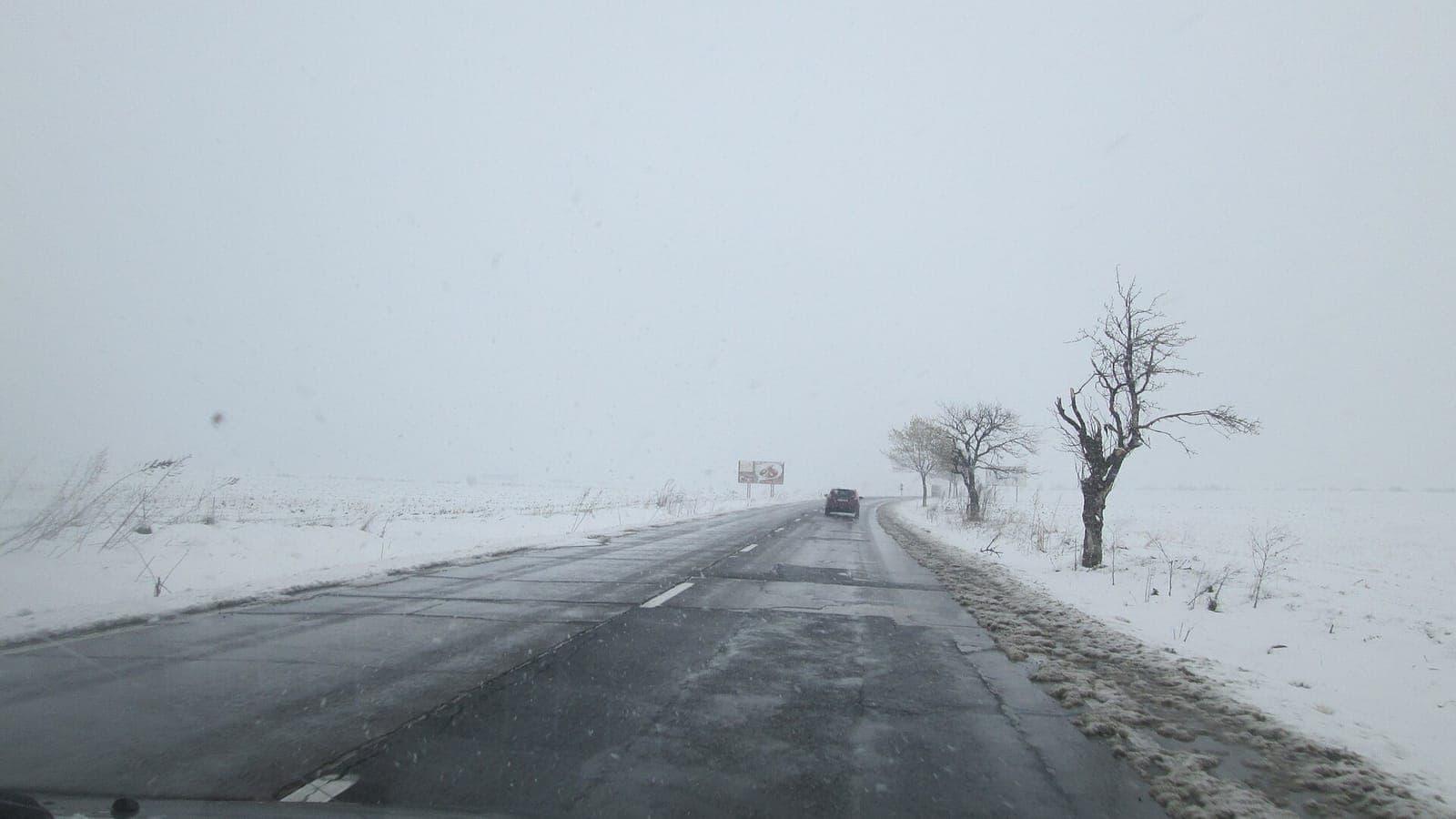
Every country has a wind it talks about. In Romania it is the crivăț, a bitter north-easterly that sweeps down from the Russian and Ukrainian steppe in winter and races across the flat lands east and south of the Carpathians. It is the reason the Bărăgan plain can feel like Siberia in January and like a desert in July, and why a snowfall here is never just a snowfall.
A wind off the steppe
The crivăț is born far from Romania. In winter a huge dome of cold, dense air settles over Siberia and European Russia, and along its southern edge the air spills out towards the Black Sea and the lower Danube. There is almost nothing in the way: no mountains, no forests, just open plain from the Volga to the Danube. By the time the wind reaches Moldavia, Dobruja and the Bărăgan it is dry, fierce and often well below freezing.
The Carpathians change everything. Curving through the middle of the country like a giant hook, they shield Transylvania from the worst of the crivăț, which is why the western side of the mountains has milder, more Central European winters. East and south of the arc, though, the wind has free rein. Romanians say "bate crivățul", the crivăț is blowing, in the same tone others reserve for a storm warning. The name itself is old and probably Slavic, and it has come to mean any cutting winter wind.
The Bărăgan: a plain with nowhere to hide
The Bărăgan stretches across south-eastern Romania, bordered by the Danube to the south and east, a vast, almost perfectly flat expanse of black earth that is the country's grain basket. It is also its most continental landscape. Summers are the hottest and driest in Romania; the national record of 44.5 °C was measured here, at Ion Sion in Brăila county, in August 1951. Winters are the coldest of the lowlands, with the crivăț driving temperatures far below −20 °C on the worst nights.
The writer Panait Istrati called his 1928 novel The Thistles of the Bărăgan, after the dry thistle balls that the autumn wind rolls for miles across the empty plain, a picture every local recognises. To break the wind, generations of farmers and foresters planted long shelterbelts of trees across the fields. Many were cut down in the decades after 1990, and their loss is one reason the snowdrifts on the roads of the Bărăgan have grown worse again.
The great blizzard of 1954
When the crivăț meets a moist low-pressure system from the Mediterranean, the result is a viscol, a Romanian blizzard, and the greatest of them all struck in early February 1954. Over several days, snow fell without pause on the whole south and east of the country while the wind blew at hurricane strength. Bucharest was buried. Drifts rose to the first-floor windows, trams vanished under snow, and in the countryside whole villages disappeared beneath white dunes several metres high.
The army was called in with tanks and bulldozers to reopen the streets of the capital, and it took weeks before trains ran normally again on the plain. Railway lines across the Bărăgan were the worst hit, with locomotives stuck for days in cuttings filled to the brim. The 1954 blizzard is still the benchmark against which every Romanian winter is measured, and the images of Bucharest's soldiers digging tunnels through the snow remain among the country's best-known weather photographs.
Living with the crivăț
The crivăț did not retire with the twentieth century. In late January and February 2012 a series of blizzards sealed off dozens of villages in Buzău, Ialomița, Călărași and Vrancea counties, and helicopters flew food and medicine to people trapped behind drifts higher than their houses. Once again the national road across the Bărăgan and the railway to the coast were closed, and once again the pictures looked like 1954.
Today the forecast carries a colour code for it: an orange or red warning for viscol tells drivers on the eastern plains to stay home, and county authorities pre-position snowploughs at known trouble spots. The wind also freezes the Danube in hard winters, when ice floes choke the river ports of Brăila and Galați. And when it blows in summer, dry and dusty, farmers watch their wheat and the Bărăgan turns for a few days into the steppe it has always half been.
Drive east out of Bucharest on a January morning and watch the trees thin out and the horizon flatten. If the sky is clear, the light is enormous and the cold is dry and clean. If the wind is up, snow streams across the road in white ribbons and every village has its plough ready. That is the crivăț, and the Bărăgan has never known winter any other way.

 South Africa
 Canada